
Women’s Health and Surgery
Gynecological and Intimate Surgery in Ennasr, Ariana
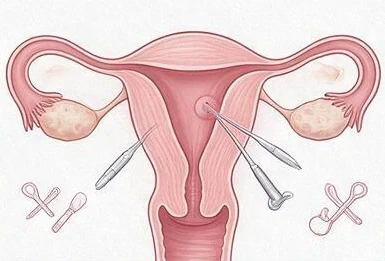
Understanding the Indication. Comparing Options. Preparing Every Step.
Dr Ines Ben Hassen Hached sees patients in Ennasr, Ariana, to assess conditions that may lead to gynecological, reconstructive or intimate surgery. The consultation reviews investigations, discusses whether surgery would be useful and explains alternatives.
Fibroids, ovarian cysts, polyps, endometriosis, prolapse or discomfort after childbirth: the plan is based on your symptoms, health and priorities, including any wish for future pregnancy.
Care Before Technology
A Surgical Consultation Does Not Mean an Operation Has Been Decided.
A diagnosis alone is not enough to determine treatment. Monitoring, medication, rehabilitation or another approach may sometimes be more appropriate. When surgery is considered, expected benefits must be weighed against risks, limitations and the possible consequences of not intervening.
Small incisions, or the absence of an abdominal incision, do not make a procedure trivial. The technique must suit the condition, anatomy and safety requirements, rather than being selected solely because it is presented as “modern”.
The Obstetrician-Gynecologist’s Role in Surgical Care
Consultation connects your symptoms, investigations and treatment options. It helps determine whether surgery should be discussed, prepare important questions and arrange referral when needed.
- Review symptoms, their impact, previous treatments and your expectations.
- Review imaging reports, tissue samples and previous procedures.
- Identify missing information before recommending a strategy.
- Compare observation, nonsurgical options and any proposed procedure.
- Explain the organs involved, potential surgical approach and implications for fertility.
- Clarify whether a specialist team is needed and how follow-up will be organized.
This page describes conditions and techniques that patients may wish to discuss. Their mention does not confirm that every procedure is carried out by the doctor or at the practice. The indication, surgeon, facility, required equipment and other professionals are clarified before scheduling.
Cysts, Fibroids, Polyps and Endometriosis: Understanding the Decisions
Decisions depend on symptoms, the nature and evolution of the lesion, and your plans. Organ preservation may be a goal, but feasibility and limitations must be explained for each case.
Ovarian Cysts
Many cysts are benign, and some resolve without treatment. Finding a cyst therefore does not automatically mean an operation is necessary. Size, ultrasound appearance, pain, change over time and menopausal status guide management.
Surgery may be discussed if a lesion persists, causes substantial symptoms or has concerning features. Further tests or specialist referral may be required before deciding.
Removing a cyst while preserving the ovary is different from removing the ovary. The planned procedure, the possibility of more extensive surgery and implications for fertility must be discussed. Laboratory analysis of removed tissue is part of follow-up when indicated.
Sudden severe pelvic pain, particularly with nausea, vomiting or faintness, requires urgent assessment.
Read the Detailed Page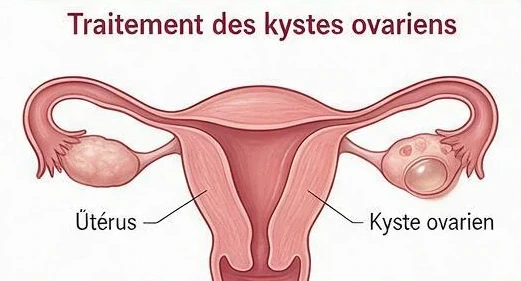
Uterine Fibroids and Myomectomy
Fibroids are generally benign growths of the uterine muscle. They may cause no symptoms or be associated with heavy periods, anemia, pelvic pressure or certain fertility problems. Location is as important as size.
Assessment describes the number, location and features of fibroids. Decisions consider symptoms, treatments already tried and any desire for pregnancy. Observation or symptom treatment may be preferable to surgery.
Myomectomy removes fibroids while preserving the uterus. Depending on location and complexity, hysteroscopy, laparoscopy or open abdominal surgery may be considered. Not all fibroids are accessible by the same route.
Bleeding risks, uterine scars, possible new fibroids and implications for pregnancy are discussed. Preserving the uterus does not guarantee a future pregnancy.
Read the Detailed Page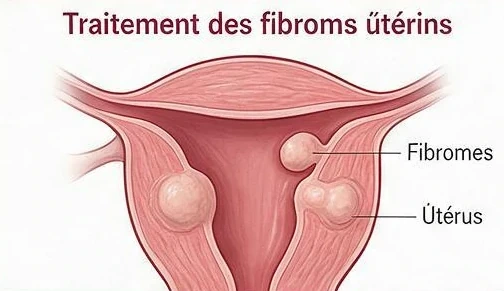
Uterine Polyps and Hysteroscopic Removal
A polyp may be discovered during assessment of bleeding, fertility investigations or an examination for another reason. The clinical context, symptoms and polyp features determine whether removal is advisable.
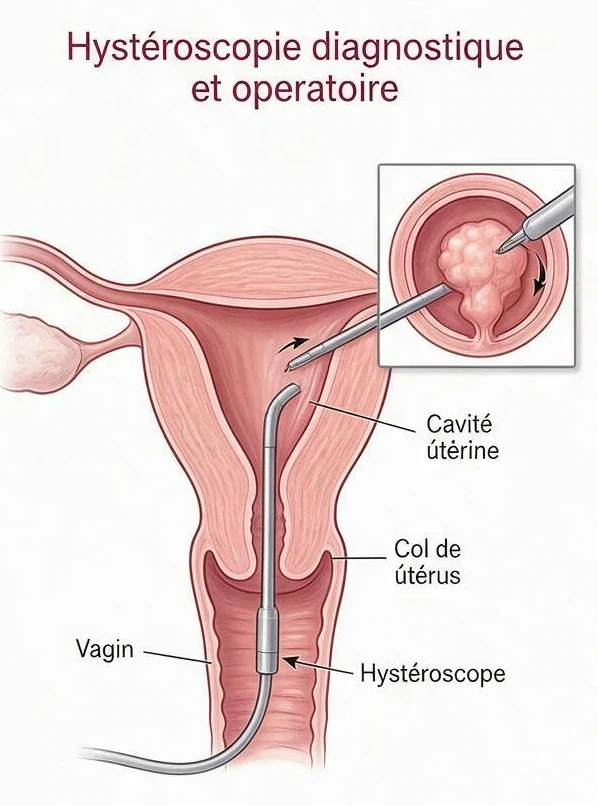
Hysteroscopy allows direct inspection of the uterine cavity. If removal is indicated, the procedure can be organized according to the polyp’s size and complexity. Diagnosis and treatment are not necessarily performed on the same day.
Before the procedure, ask about pain relief, possible anesthesia and aftercare instructions. Tissue analysis, when a sample is removed, and communication of results must be arranged.
Read the Detailed Page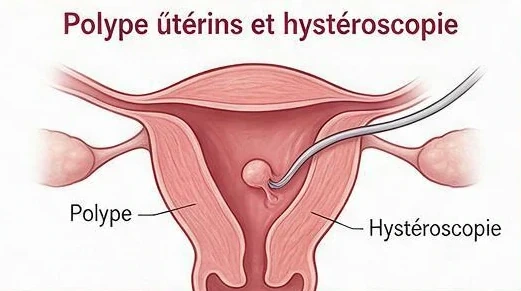
Surgery for Endometriosis
Endometriosis does not automatically require surgery. Pain, organs involved, previous treatments, imaging and pregnancy plans guide discussion.
Deep disease or involvement of particular organs may require a multidisciplinary team. Preoperative assessment should clarify the extent of proposed surgery, not simply confirm the diagnosis.
Surgery may help, but cannot guarantee that all pain will disappear or that disease will not recur. Possible effects on the ovaries are especially important when ovarian or repeat surgery is considered.
When fertility is a concern, potential benefits of surgery must be compared with other steps. Options are discussed with relevant specialists, rather than treating surgery as an automatic prerequisite for IVF.
Read the Detailed Page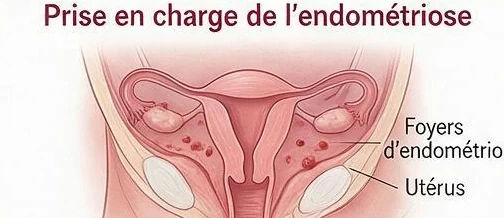
Surgery and Fertility Plans
Certain lesions inside the uterine cavity, adhesions or pelvic conditions may prompt discussion of surgery during fertility assessment. The aim should be clear: treating a lesion, improving anatomy or gaining useful diagnostic information.
An operation does not automatically improve pregnancy chances. Potential benefits, risks, time required and other options, including assisted reproduction, must be compared.
Age, ovarian reserve, previous surgery and both partners’ fertility assessment contribute to the decision. The timing of attempts to conceive after surgery depends on the procedure.
Read the Detailed Page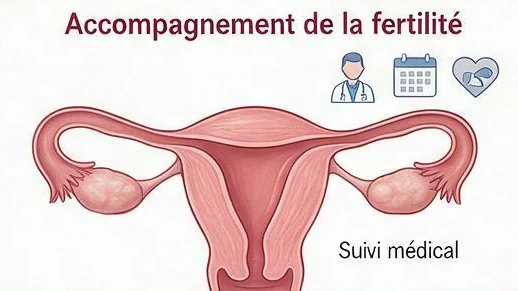
Uterine Malformations and Adhesions
An unusual uterine shape or adhesions inside its cavity require accurate characterization. Different imaging findings do not necessarily correspond to the same diagnosis or treatment.
Symptoms, previous pregnancies, possible miscarriages and available tests inform whether a procedure would be helpful. Not all uterine malformations need correction.
If operative hysteroscopy is proposed, ask what tissue will be treated, what the procedure cannot achieve, the risk of adhesions and any planned review. No procedure can guarantee a pregnancy reaching term.
Read the Detailed Page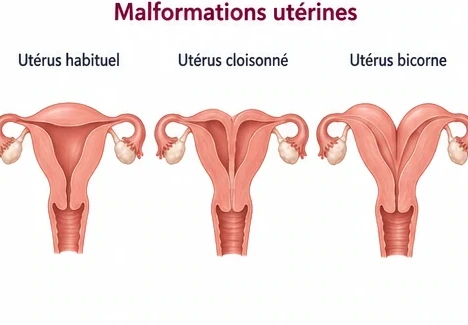
Cervical Conization
Conization removes a portion of the cervix to treat or investigate certain abnormalities. Its indication depends on cervical screening, colposcopy and tissue-sample findings, not merely on an isolated positive HPV test.
The consultation explains why treatment is proposed, the planned procedure and any anesthesia. Analysis of the removed tissue guides the next steps.
Follow-up after treatment remains important. Possible implications for future pregnancy and relevant information for obstetric clinicians are discussed. A reassuring follow-up result does not replace the recommended schedule.
Read the Detailed Page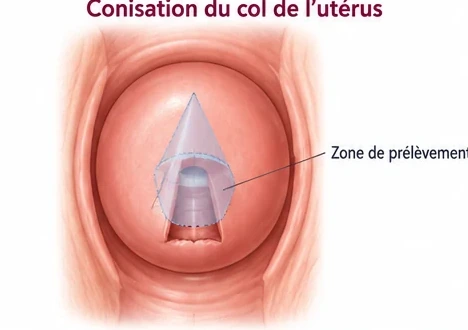
Bartholin Cyst or Abscess
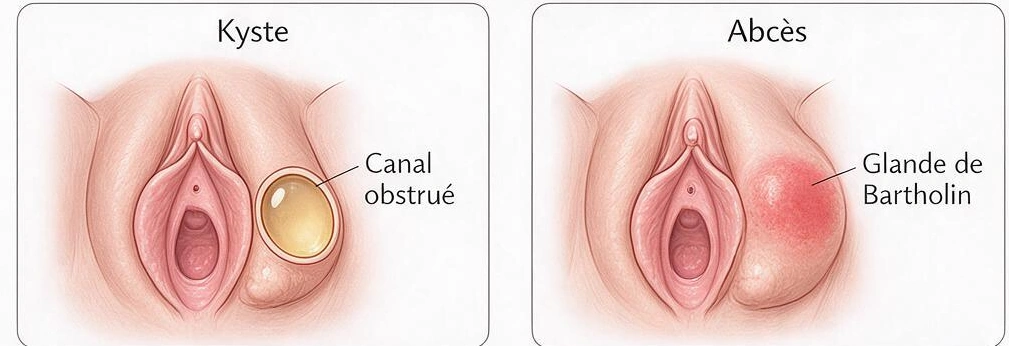
A swelling near the vaginal opening warrants assessment, particularly if painful. A cyst, abscess and other vulvar lesions must be distinguished.
Depending on symptoms, observation, drainage or another procedure may be appropriate. The choice depends on infection, recurrence and lesion appearance.
An unusual or persistent mass needs assessment before being labelled a simple cyst. Do not try to puncture it yourself. Fever, significant pain or rapid worsening warrants prompt medical attention.
Read the Detailed PagePelvic Organ Prolapse and Urinary Incontinence
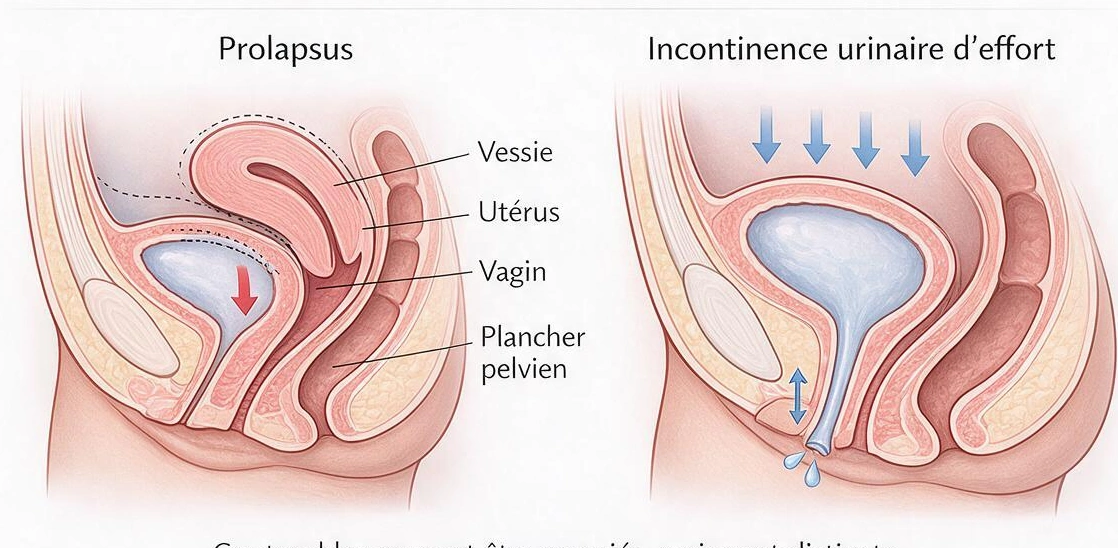
Pelvic heaviness, a bulge, organ descent or urinary leakage requires functional assessment. Prolapse and different forms of urinary leakage do not all call for the same treatment.
Pelvic-floor rehabilitation, a pessary in suitable cases or surgery may be discussed according to symptoms, examination and patient preferences. Visible prolapse does not automatically require surgery.
If surgery is considered, ask about the surgical approach, tissues involved, possible use of a mesh implant and procedure-specific risks. Recurrence, pain and changes in urinary function should be explained.
Read the Detailed PageHysterectomy and Adnexectomy
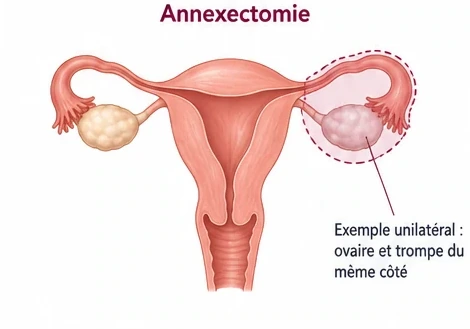
Hysterectomy removes the uterus. It is distinct from removing an ovary, fallopian tube or the adnexa. These procedures are not automatically combined.
Before surgery, clarify which organs will be removed, whether the cervix is preserved and available alternatives. Hysterectomy prevents carrying a pregnancy. Removing both ovaries before menopause has specific hormonal consequences.
Vaginal surgery, laparoscopy and open abdominal surgery are selected according to the medical record. Previous operations, uterine size, disease and safety considerations influence the choice.
Recovery, tissue-analysis results, resuming activities and follow-up needs should be anticipated. Hysterectomy is not routinely indicated for every fibroid or bleeding problem.
Read the Detailed Page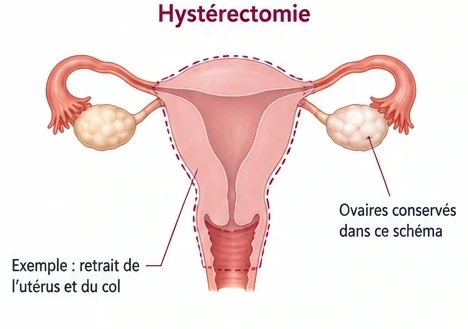
Ectopic Pregnancy, Pregnancy Termination and Cervical Cerclage
These situations have different indications. Some require emergency care; others require discussion of options and specialized arrangements. They should not be treated as one protocol.
Ectopic Pregnancy
A pregnancy implanted outside the uterus, most commonly in a fallopian tube, may be an emergency. Assessment includes the patient’s condition and appropriate investigations.
Observation, medication and surgery are suitable for different circumstances. The choice depends on clinical stability, test results and whether safe monitoring is possible.
Severe pain, faintness, shoulder pain or bleeding when pregnancy is possible should not wait for a scheduled consultation.
Read the Detailed Page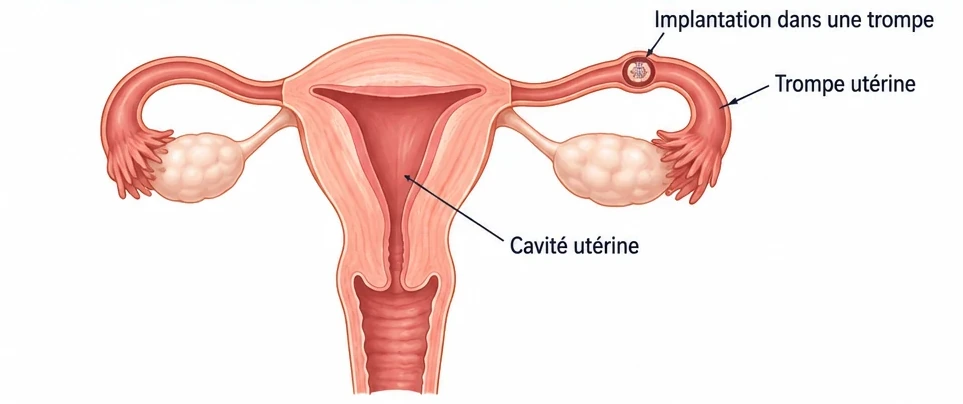
Pregnancy Termination
A request should be discussed confidentially, respectfully and without judgment. Assessment clarifies gestational age, the medical situation and options permitted under Tunisian law.
Termination is not necessarily surgical. The method, authorized facility, consent, pain management and follow-up are arranged with the relevant healthcare professionals.
Seek timely advice to learn about options appropriate to your situation. This page is not a self-medication protocol or confirmation that every method is available.
Read the Detailed Page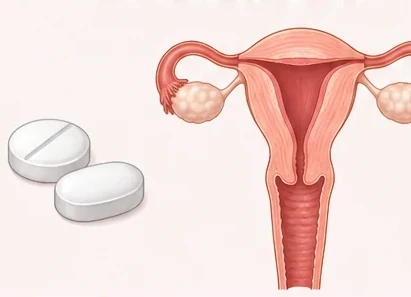
Cervical Cerclage During Pregnancy
Cerclage uses a stitch around the cervix in selected situations involving risk of early opening. It may be discussed based on obstetric history or assessment during pregnancy.
It is not routinely necessary and cannot eliminate all risk of premature birth. The decision considers possible benefits, limitations and risks.
The obstetric team explains the technique, possible anesthesia, monitoring, warning signs and stitch removal. The procedure’s location is confirmed separately.
Read the Detailed Page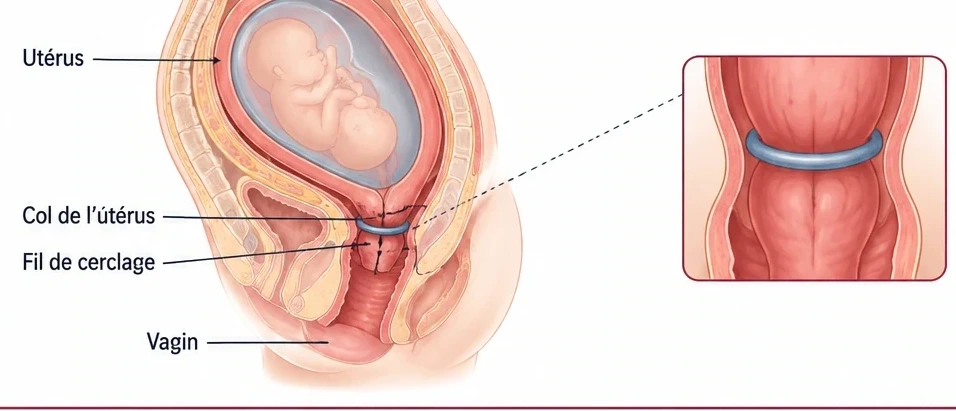
Distinguishing Functional Discomfort, Tissue Repair and Aesthetic Requests
Pain, scarring, a sensation of laxity and concerns about appearance require different responses. Assessment precedes the choice of a procedure and includes the option of no intervention.
Labiaplasty: Labia Minora Reduction
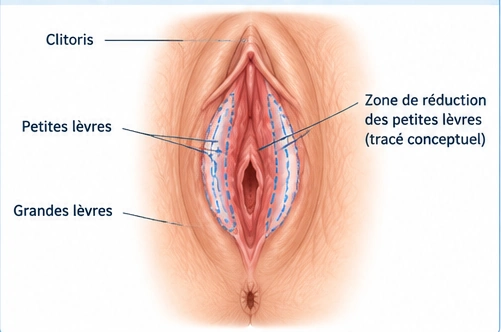
The labia minora naturally vary in size, color and symmetry. Anatomical variation alone is neither an illness nor an indication for surgery.
Requests may relate to friction, particular activities or personal concerns. Assessment also seeks irritation or other causes that could explain symptoms.
If reduction is considered, the technique, scars, pain management and temporary restrictions must be explained. Bleeding, infection, asymmetry, persistent pain or changed sensation can occur. Perfect symmetry cannot be guaranteed.
Read the Detailed PageVaginoplasty and Vaginal Tightening Requests
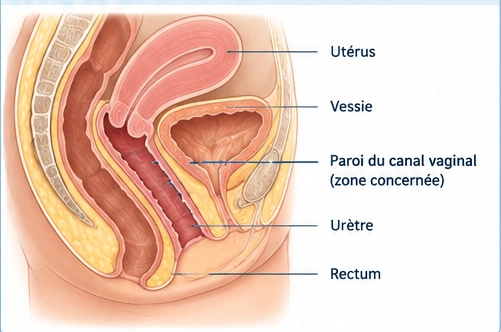
A sensation of laxity first calls for pelvic floor assessment and investigation for prolapse. Rehabilitation, repair and changes in vaginal calibre serve different purposes.
The actual concern should be clarified: sensation, pain, urinary symptoms, scarring or sexual difficulties. Surgery should not be chosen solely because of a commercial label.
An operation may cause painful scarring, discomfort during sex or changed sensations. Improved pleasure or sexual satisfaction is not guaranteed.
Read the Detailed PagePerineoplasty and Repair After Childbirth
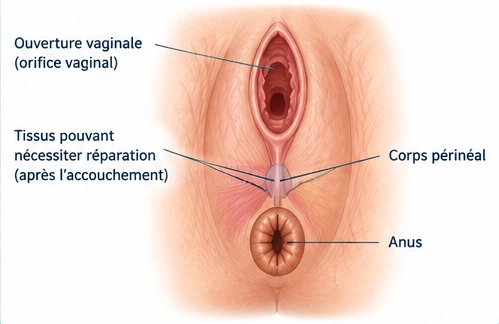
After a tear, episiotomy or another intervention, troublesome scarring or incomplete repair may warrant assessment. Not all postpartum pain requires another operation.
Assessment distinguishes scarring, pain, muscular problems and prolapse. Rehabilitation or pain management may be preferable or complementary.
If repair is proposed, its purpose and limitations are explained. Healing, returning to activities and implications of a later pregnancy are discussed according to your plans.
Read the Detailed PageChanging Labia Majora Volume
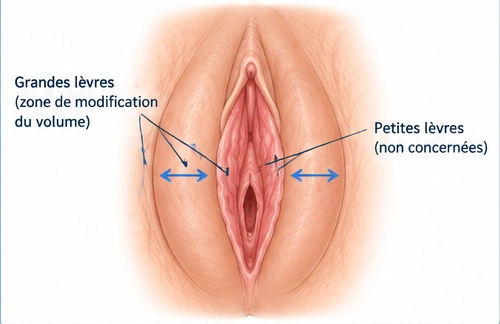
A request to change volume or contour requires discussion of expectations and whether the concern is natural variation or a medical condition. It should not be portrayed as necessary because of age.
If a procedure is discussed, the method, any product used, duration of effect and alternatives should be identified. Methods differ in practical requirements and evidence quality.
Irregularity, asymmetry, infection or pain may occur. Availability of a particular procedure must be confirmed; describing it is not a blanket recommendation.
Read the Detailed PageClitoral Hood Correction Requests
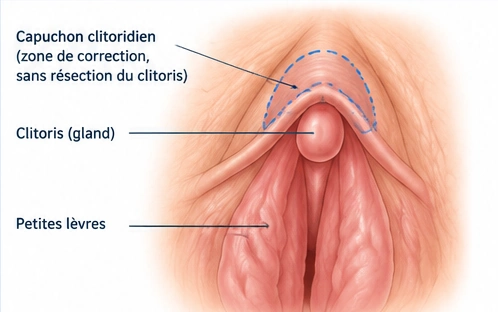
This area contains sensitive structures. Irritation, pain or discomfort should be assessed before any tissue modification is considered.
The desired goal, alternatives, technique and limitations should be understood. An unusual appearance is not necessarily abnormal.
Changes in sensation, pain and adhesions are possible. Improved orgasm cannot be promised. Any proposal needs specific information and consent free from pressure.
Read the Detailed PageHymenoplasty: Information and Limitations
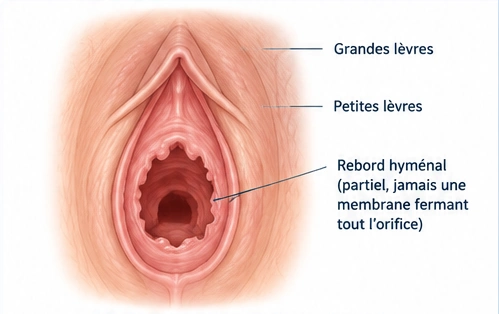
Reconstruction of hymenal tissue requires confidential discussion, freedom from coercion and review of the applicable legal framework.
The appearance of the hymen cannot determine sexual history, and no examination can prove “virginity”. Surgery cannot guarantee bleeding during later sexual intercourse.
Possible risks and the option of no surgery must be discussed. Threats, pressure or violence deserve to be disclosed in a setting where appropriate protection can be considered.
Read the Detailed Page“G-Spot Amplification”: Distinguishing a Label from Proven Benefit
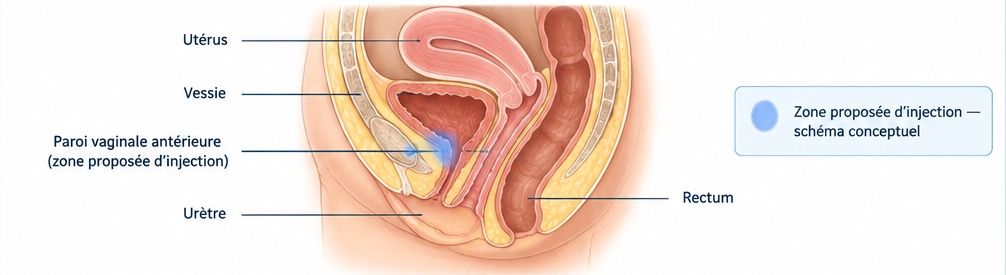
This term is used for procedures claimed to increase sensitivity or pleasure. It is not a standard medical indication with established sexual benefit.
Improved desire, orgasm or satisfaction must not be promised. Sexual difficulties first deserve broad assessment of pain, dryness, medication, medical conditions and relationship experiences.
Mentioning this request serves to explain its limitations. It does not confirm the procedure is offered at the practice or recommend an invasive intervention.
Read the Detailed PageIntimate surgery carries risks including bleeding, infection, scarring, persistent pain and changes in sensitivity. Aesthetic changes do not guarantee sexual improvement. The option of no surgery and nonsurgical alternatives must remain open for discussion.
Respecting Your Wishes Without Imposing an Intimate Ideal.
Hysteroscopy, Laparoscopy, Vaginal Surgery or Laparotomy: What Is the Difference?
The surgical approach describes how the surgeon accesses the treatment area. It does not summarize complexity or recovery time on its own. Choice remains individualized.
Diagnostic and Operative Hysteroscopy
A thin camera instrument is passed through the cervix to examine the uterine cavity, with fluid used to improve visibility. There is no abdominal incision for this approach.
The examination may be diagnostic, include a biopsy or permit certain procedures, including treatment of polyps, some fibroids or adhesions. Arrangements depend on the planned procedure.
Pain should be discussed before the appointment. Pain relief, sedation or anesthesia options depend on the facility. You can ask for an examination without general anesthesia to stop.
Mention any possibility of pregnancy. Preparation and fasting instructions depend in part on the anesthesia planned; do not assume another patient’s instructions apply to you.
Read the Detailed PageGynecological Laparoscopy
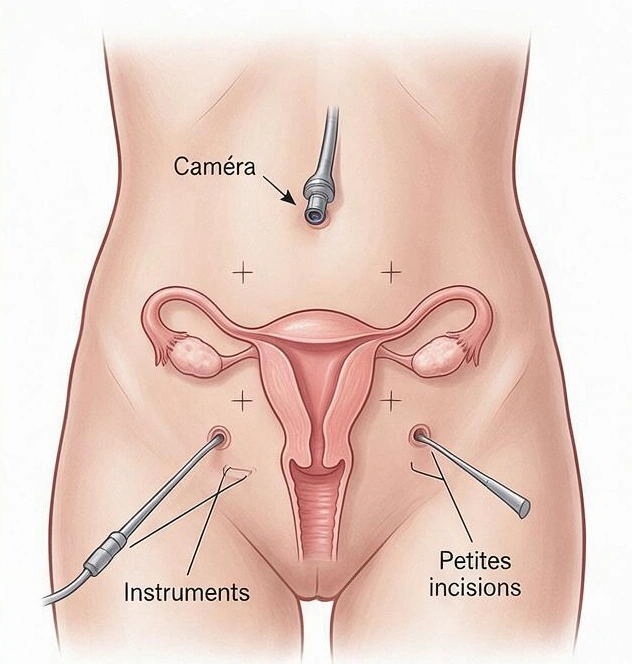
Laparoscopy allows pelvic examination or treatment through small abdominal incisions using a camera and instruments, usually under general anesthesia.
Gas is introduced into the abdomen to improve visibility. This approach may be considered for certain operations involving ovaries, tubes, uterus or endometriosis.
Risks include bleeding, infection or injury to a nearby organ. Open abdominal surgery may become necessary if safety requires it.
Recovery depends on the actual intervention: a simple examination and extensive pelvic surgery have different recovery needs even when incisions look similar.
Read the Detailed PageVaginal Surgery
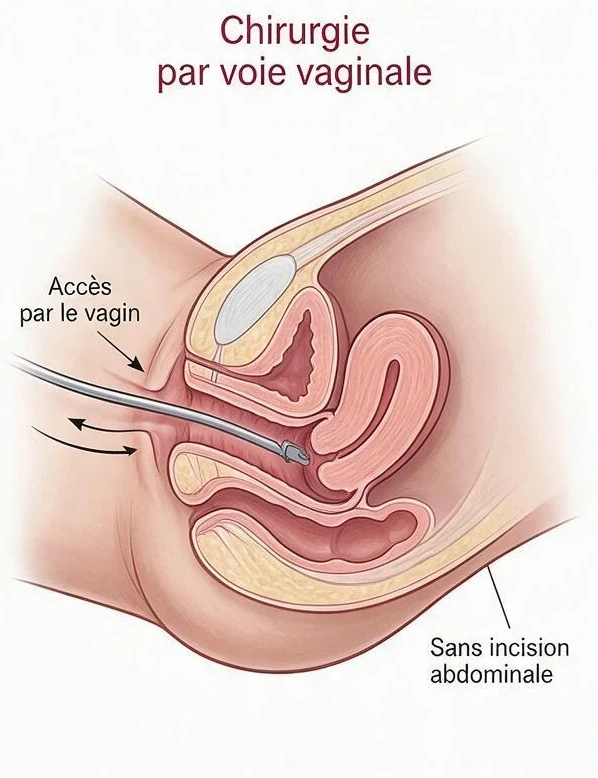
Some operations can be performed through the natural vaginal route without an abdominal wall incision. It may be an option for certain repairs or hysterectomies.
Suitability depends on anatomy, the procedure and medical history. No external incision does not mean no pain, sutures or risk.
Local care, resuming intercourse, physical effort and monitoring depend on the operation, not simply whether there is a visible scar.
Read the Detailed PageLaparotomy: Open Abdominal Surgery
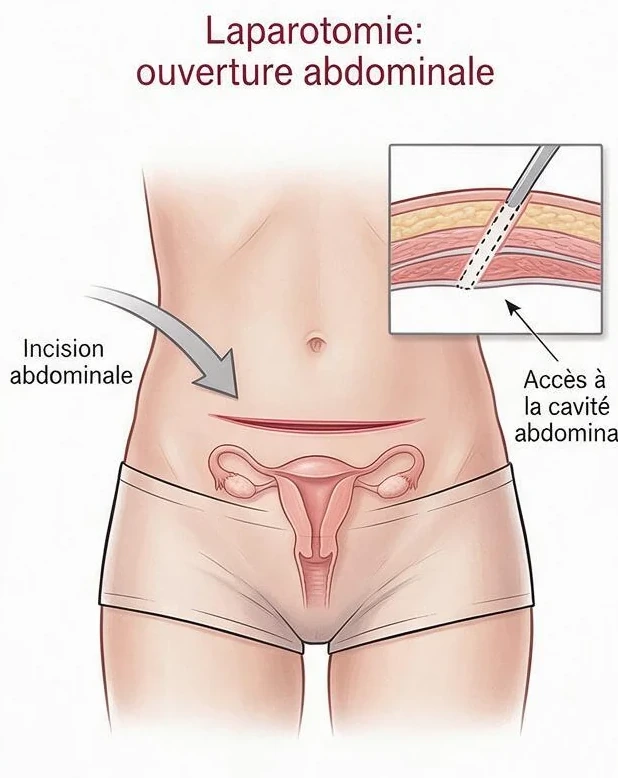
A larger abdominal incision may be required because of the condition, the volume involved, adhesions or operating circumstances.
Open surgery may be planned from the beginning or selected during laparoscopy. Conversion is not necessarily a failure: it may be needed for safe treatment.
Pain control, scar care, length of hospital stay and recovery require specific instructions. No recovery time can be guaranteed without knowing the operation and your health.
Read the Detailed PageBefore and After Surgery: What Needs to Be Arranged
-
Confirming the Indication
Review tests, clarify symptoms, define the goal and compare alternatives. Pregnancy plans, earlier treatments and preferences inform the decision.
-
Arranging the Operation
Confirm the surgeon, facility, anesthesia, required tests, consent and fees. Ask for written instructions and emergency contact details.
-
Planning Recovery
Plan transport home, assistance, medications, restrictions, tissue-analysis results and follow-up. Timing depends on the procedure and your recovery.
Medical Documents and Treatments to Mention
Bring reports, available images, tissue-sample results and previous operating reports. Prepare a full list of medications, supplements and allergies.
Mention anticoagulants, blood-clot history, reactions to anesthesia and possible pregnancy. Do not stop or change treatment without instructions.
Anesthesia, Fasting and Assistance
Anesthesia choice depends on the procedure and health. A pre-anesthetic assessment may be needed, and investigations are selected as appropriate.
Follow the team’s fasting instructions and clarify discharge arrangements. After anesthesia or sedation, do not assume you can drive or go home alone.
Pain, Scars and Activity
Pain control and wound care should be explained before discharge. Ask what is expected and which symptoms require contact with the team.
Returning to work, sport, lifting, sex and driving does not follow the same timetable after every operation. Guidance depends on the procedure, recovery and activities.
Results, Follow-Up and Travel
Tissue analysis may change subsequent care. Confirm who will communicate results, when and at which appointment they will be discussed.
If you travel from another region or plan a trip, discuss follow-up, required length of stay and travel suitability. Do not assume immediate travel after the procedure is safe.
Understanding Costs
Ask about consultation fees and, if surgery is planned, request a detailed estimate. Distinguish surgeon fees, facility costs, anesthesia, tests, possible tissue analysis and follow-up.
Do not assume medication, follow-up visits, travel or accommodation are included. No single surgical price is given on this page because the procedure and arrangements must first be defined.
General risks may include bleeding, infection, thrombosis or anesthesia complications. Depending on the operation, injury to neighboring organs, adhesions, persistent pain or repeat surgery may occur. Information should address the specific proposed operation rather than a generic list alone.
Which Symptoms Require Prompt Advice?
Follow the instructions and emergency contact details given by the operating team. Contact the relevant professionals promptly for severe or worsening pain, fever, heavy bleeding, trouble urinating, persistent vomiting or worsening wound symptoms.
Breathlessness, chest pain, severe faintness or a painful swollen leg require urgent care. Do not wait for follow-up or an email reply. This list is not exhaustive.
Routine practice contact channels are not an emergency service. In immediate danger, seek an appropriate facility able to assess you without delay.
Essential Information
Your Questions About Gynecological Surgery
Does a Surgical Consultation Mean an Operation Has Been Decided?
No. It is for assessing indications and alternatives. Monitoring, medication or rehabilitation may be preferable. You can ask for time to consider options or seek another opinion.
Are Operations Performed at the Practice?
The practice is for consultations. Where surgery takes place, required facilities, operator and team are confirmed separately. Description of a technique does not mean it is performed in the consulting room.
Do All Fibroids or Cysts Need Surgery?
No. Appearance, symptoms, changes and pregnancy plans guide decisions. Some situations need monitoring; others require additional tests or intervention.
What Is the Difference Between Hysteroscopy and Laparoscopy?
Hysteroscopy examines the uterine cavity through the cervix. Laparoscopy examines or treats pelvic organs through abdominal incisions. They address different questions.
Does Hysterectomy Always Include Removal of the Ovaries?
No. Removal of the uterus and ovaries are separate procedures. The organs involved, consequences and alternatives must be clarified beforehand.
Can the Uterus or Ovaries Be Preserved?
Conservative options are discussed when medically appropriate. Feasibility depends on the disease, required procedure and any emergency. Preserving an organ does not guarantee its future function or a pregnancy.
Is Hysteroscopy Always Painless?
No. Pain and discomfort vary. Discuss relief options beforehand, especially after a previously painful examination. Sedation or anesthesia depends on the planned arrangements.
How Long Does Recovery Take?
There is no universal recovery period. The procedure, surgical route, health and complications affect recovery. Work, sport, intercourse and travel require individualized instructions.
Does Intimate Surgery Always Improve Sexual Life?
No. It may change appearance without improving desire or pleasure and can cause pain or changes in sensitivity. Sexual difficulties require broad assessment, not promises of surgical results.
Can Care Be Arranged From Another Region?
Yes. Consultation can be planned by describing concerns, available test results and treatments. Surgery requires separate preparation, accompaniment, possible accommodation and check-ups.
Confirm the arrangements before travelling. Do not assume you can depart immediately after surgery.
Our Commitment
Informed Decisions That Respect Your Body.
Listening to your concerns, explaining options and preparing follow-up.
Appropriateness of surgery matters more than how new a technique is. Your consent, health and priorities are central, without promising results or absence of risk.
The Practice
Your Gynecological Surgery Consultation in Ennasr, Ariana
Dr Ines Ben Hassen Hached sees you to discuss an indication, review results or prepare an individualized care plan. Bring relevant reports and your medication list.
The practice welcomes patients from Ariana, Tunis and other parts of Tunisia by appointment. When contacting us, mention your concerns, available test results and any previous procedures.
Dr Ines Ben Hassen Hached
Obstetrician-Gynecologist
First Floor, Office BA5 bisResidence La Coupole
2 Avenue Hédi Nouira, Ennasr
Ariana 2037, Tunisia
Practice Hours
Monday to Saturday, from
to .
Closed on Sunday.
Consultations by appointment. Confirm your slot and opening hours around public holidays.
Phone:
+216 27 550 875
+216 25 333 530
Email:
inesbenhassen94@gmail.com
Ask about fees and required documents before attending. Do not send intimate photographs or complete medical records without asking for an appropriate channel. Routine practice contacts are not an emergency service.
Medical Information and References
This page provides general information and does not replace individual medical consultation. Indications, techniques and aftercare depend on the patient’s circumstances. International references do not define the legal framework in Tunisia or availability of a particular procedure at the practice.
- Milton Keynes University Hospital — Gynecological Laparoscopy: Preparation, Risks and Recovery (in English)
- NHS — Hysteroscopy: Indications, Pain and Follow-Up (in English)
- NHS — Ovarian Cysts: Assessment and Treatment Options (in English)
- Leeds Teaching Hospitals — Laparoscopy and Hysteroscopy (in English)
- NHS — Indications for Hysterectomy (in English)
- RCOG — Cervical Cerclage: Indications and Follow-Up (in English)
- ACOG — Cosmetic Genital Surgery: Evidence Limitations and Risks (in English)
- WHO — No Scientific Validity of “Virginity Tests” (in English)
- ACOG — Elective Female Genital Cosmetic Surgery
Laser Hair Removal in Tunis
For treatment indications, medical precautions and how laser sessions work, see our dedicated page.
Explore Laser Hair Removal in Tunis