
Recommendations and management are tailored during the consultation. This page does not replace individual medical advice.
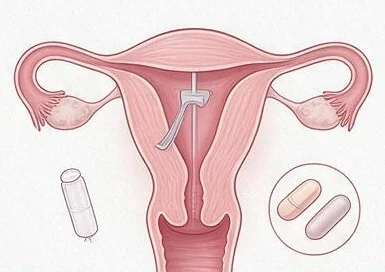
Why Seek Medical Advice When Choosing Contraception?
Choosing contraception depends on age, medical history, medications, smoking, cardiovascular health, menstrual patterns, pregnancy plans and personal preferences. During a consultation, you can discuss benefits, practical considerations, contraindications and alternatives. No single method is ideal for every woman.
What Happens During the Consultation?
The doctor begins with a confidential discussion about your goals, medical history and any symptoms. Blood pressure measurement or additional tests may be appropriate depending on the method considered. A pelvic examination or ultrasound is not routinely needed for every form of contraception. Your consent is requested for any examination.
The Contraceptive Pill
Different oral contraceptives are available, including combined pills and progestogen-only pills. Combined pills are unsuitable in some situations, such as certain blood-clot risks or migraine with aura. Effectiveness also depends on regular use. Possible side effects and what to do if you miss a pill should be explained.
The Intrauterine Device (IUD)
Copper IUDs and hormonal intrauterine systems work differently, may affect periods differently and have different durations of use. Insertion is a medical procedure; its suitability, precautions and setting are discussed individually. Pain, bleeding and uncommon complications are possible. The consultation helps select the most appropriate device.
The Contraceptive Implant
The implant is a reversible hormonal contraceptive placed beneath the skin of the upper arm by a trained professional. It can alter menstrual bleeding. Availability, insertion and removal require assessment and confirmation with the practice; mentioning the method does not mean that every procedure is performed on site.
Other Methods
Condoms, progestogen-only contraception, diaphragms and emergency contraception can be discussed according to your circumstances. Condoms are important for reducing the risk of sexually transmitted infections, even if another contraceptive method is used. Emergency contraception requires advice tailored to the time since intercourse.
Follow-Up and Reassessment After Choosing a Method
Follow-up provides an opportunity to assess tolerability, bleeding patterns, satisfaction and any unusual symptoms. Your method can be changed as your circumstances evolve. Seek urgent medical care for severe pain, very heavy bleeding, sudden breathlessness or chest pain.
Contraception After Childbirth and During Breastfeeding
Some contraceptive methods can be used after childbirth or during breastfeeding; others require consideration of the time since delivery and individual risks. The doctor can suggest an approach consistent with your health and future pregnancy plans.
Frequently Asked Questions
Is an Ultrasound Required Before Starting the Pill?
No. An ultrasound is not required for every woman. Assessment depends on the chosen method, medical history and symptoms.
Can I Switch Contraceptive Methods?
Yes. A consultation can help plan the change while avoiding an unprotected interval.
Does the Consultation Guarantee Implant Insertion?
No. Suitability, availability and where insertion takes place must be confirmed by the practice.
Consultations and Appointments in Tunis
The first step is a consultation with Dr Ines Ben Hassen Hached in Ennasr 2, Ariana. The doctor will explain which services can be provided at the practice, which require a specialist facility and how follow-up is arranged.
Request an Appointment