
The indications and care arrangements are individualized during the consultation. This page does not replace personal medical advice.
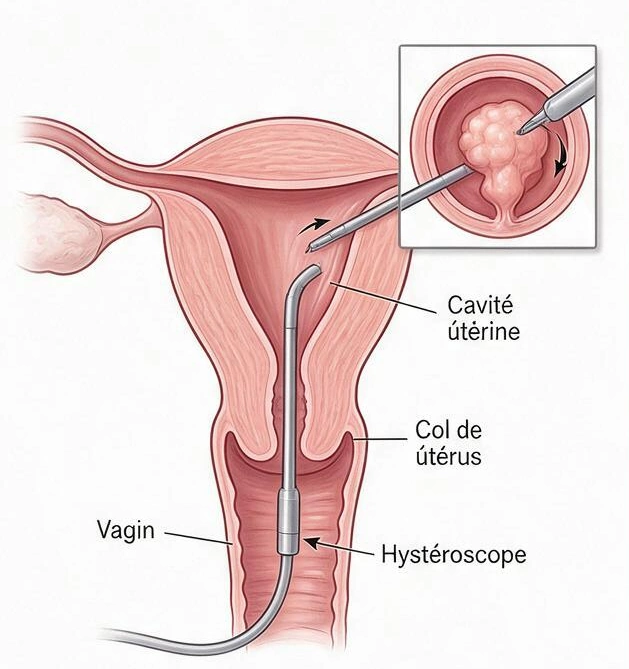
What Is Hysteroscopy?
Hysteroscopy allows the uterine cavity to be viewed using a slender instrument with a camera inserted through the natural passages. It may be diagnostic, to investigate a symptom, or operative, to treat certain abnormalities when indicated.
In Which Situations May This Examination Be Considered?
Hysteroscopy may be considered for abnormal uterine bleeding, suspected polyps or submucosal fibroids, certain uterine cavity abnormalities or a targeted infertility investigation. It is not a routine examination; its relevance depends on the clinical context, examination and ultrasound findings.
Diagnostic Hysteroscopy: What Happens
Following explanation and consent, an optical instrument is used to inspect the uterine cavity. Comfort measures and pain relief vary with the procedure, symptoms and location. A biopsy may sometimes be considered. The examination can cause cramps or light bleeding.
How Is Operative Hysteroscopy Different?
When intrauterine treatment is indicated, appropriate instruments may be used to remove a polyp, treat certain lesions or take a biopsy. The procedure requires specific arrangements and sometimes anesthesia. Details are confirmed after consultation.
How Should You Prepare?
Preparation depends on the stage of the menstrual cycle, the planned treatment, any possible pregnancy, medication, anesthesia and medical history. The practice will explain which examinations, instructions and documents are relevant. Report any suspected pregnancy, infection or allergy.
Where Is the Examination or Procedure Performed?
The initial consultation and follow-up can be arranged at the practice in Ennasr 2, Ariana. The setting for diagnostic or operative hysteroscopy depends on complexity, required equipment, anesthesia and the capabilities of the chosen facility. It is confirmed individually and should not automatically be assumed to be at the practice.
What Is Typical Recovery Like?
Mild pelvic pain and bleeding may occur after the examination. Rest time and return to normal activities vary according to the procedure and anesthesia. Fever, severe pain, an unpleasant odor or heavy bleeding require prompt medical attention.
Results and Follow-Up
The appearance of the uterine cavity can be discussed after the examination. If a sample is sent for testing, the pathology report becomes available later. A follow-up appointment allows the result to be explained, symptoms reassessed and next steps discussed.
Frequently Asked Questions
Does Hysteroscopy Require Anesthesia?
Not always. It depends on whether hysteroscopy is diagnostic or operative, the planned procedure and the location.
Can the Examination Be Performed on the Same Day?
This cannot be guaranteed: a preliminary assessment and appropriate arrangements may be required.
Is Hysteroscopy a Treatment for Infertility?
It can form part of the assessment or treatment of certain uterine abnormalities, but is not indicated for every patient.
Consultations and Appointments in Tunis
The first step is a consultation with Dr Ines Ben Hassen Hached in Ennasr 2, Ariana. The physician explains what can be done at the practice, what requires a specialist facility and how follow-up will be organized.
Request an Appointment