Dr Ines Ben Hassen Hached’s practice · Ennasr 2, Ariana · Greater Tunis
Intimate and Gynecological Surgery in Tunis
Hymenoplasty, vaginoplasty, labiaplasty, labia majora augmentation and other gynecological care. At Dr Ines Ben Hassen Hached’s practice, every care pathway begins with an in-person appointment in Ennasr 2, Ariana, with an obstetrician-gynecologist whose practice also includes aesthetic gynecology.
Dr Ines Ben Hassen Hached, obstetrician-gynecologist
Female intimate surgery
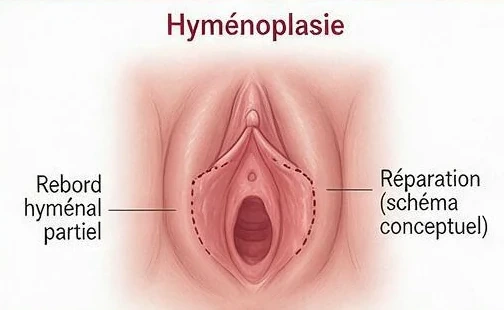
Hymenoplasty
Hymenoplasty is a procedure involving hymenal tissue. The private consultation provides an opportunity to discuss your request, expectations and, if you wish, possible pressure from others. The appearance of the hymen cannot determine whether someone has had sexual intercourse. Surgery cannot guarantee subsequent bleeding. The gynecologist explains healing, the possible risks of pain, bleeding or infection, and the follow-up arrangements.
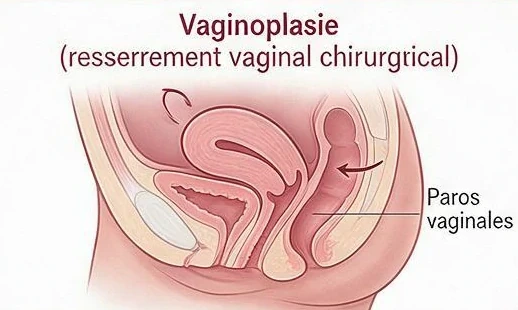
This surgery changes certain vaginal tissues. Before considering it, an assessment distinguishes perceived laxity from obstetric scarring, prolapse, dryness and pelvic floor dysfunction. Depending on the diagnosis, rehabilitation or another treatment may be offered. Benefits for sexual sensation are uncertain. Risks include pain during intercourse, scarring and persistent discomfort.
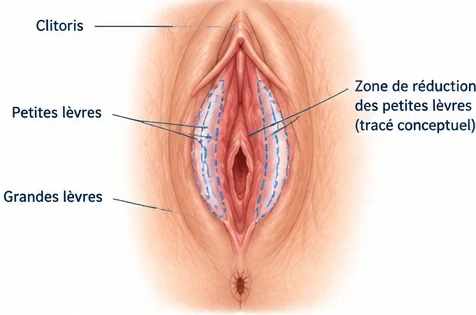
Labiaplasty, also known as nymphoplasty, changes the size or shape of the labia minora. The consultation clarifies discomfort in daily activities, during sport or when wearing certain clothes, and checks for other causes of irritation. Asymmetry can be part of normal anatomical diversity. Preoperative discussion covers the desired appearance, scarring risk, changes in sensitivity and local aftercare.
Labia minora reduction: conceptual markings
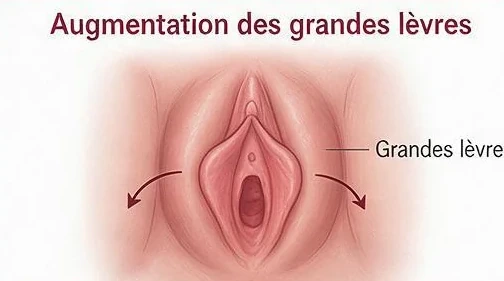
Labia majora augmentation
The aim is to change the volume or contour of the labia majora. The possible technique, degree of correction and duration of effect are discussed after examination. Risks depend on the method and may include asymmetry, infection or contour irregularities.
Labia majora augmentation
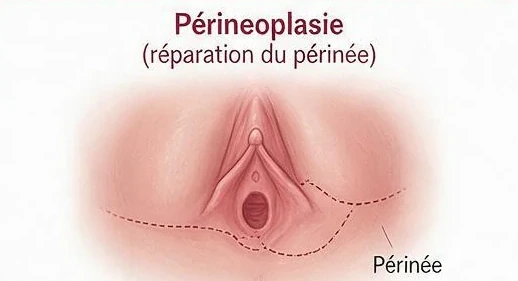
Perineoplasty (perineal repair)
Surgical repair of the perineum may be considered after an injury or troublesome obstetric scar. The assessment determines the source of discomfort and whether pelvic floor rehabilitation may help.
Perineoplasty and perineal repair
Voluntary termination of pregnancy
Legal framework in Tunisia
Article 214 of the Tunisian Penal Code allows termination of pregnancy during the first three months when performed by a legally practising physician in a hospital, healthcare establishment or authorized clinic. After that point, the legislation provides for circumstances related to the pregnant woman’s health or psychological well-being, or a risk of serious illness or disability in the unborn child. An approved establishment and a report from the treating physician are then required. The gynecologist assesses gestational age and the legal framework applicable to your situation.
Consultation, method and consent
The consultation establishes gestational age and assesses symptoms and medical history. Ultrasound may be indicated, particularly if gestational age or the pregnancy’s location is uncertain. Medical or aspiration methods, depending on gestation and clinical assessment, are explained along with what to expect afterward, pain relief and cost. The decision must be based on your free and informed consent.
After termination
The team explains expected bleeding and cramps, written aftercare instructions, how to contact a clinician and any follow-up appropriate to the method and your circumstances. Contraception may also be discussed if you wish.
When to seek emergency care
Very heavy bleeding, severe or increasing pain, fever or faintness require urgent assessment. One-sided pain with faintness or shoulder pain could indicate an ectopic pregnancy. Seek emergency care in these situations.
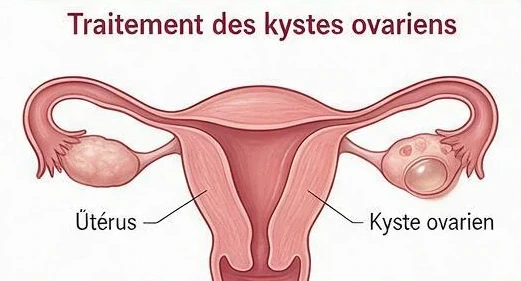
The type and size of the cyst, symptoms and pregnancy plans determine whether observation or surgery is appropriate. Preserving the ovary is discussed when medically possible.
Ovarian cysts: care pathway diagram
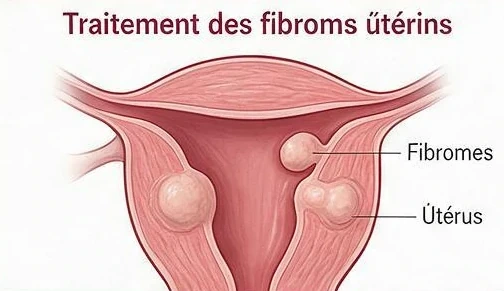
Treatment of uterine fibroids
Bleeding, pain, fibroid size and location, and pregnancy plans guide the decision. Options range from monitoring or medication to surgery, including myomectomy in some cases.
Uterine fibroids: anatomical diagram
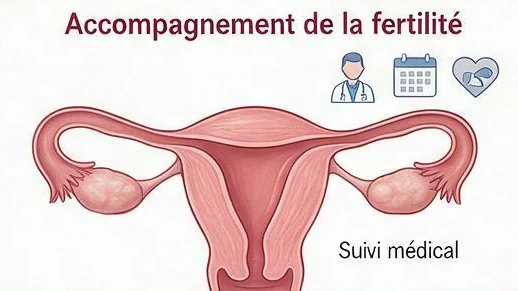
Fertility care
Consultation helps determine appropriate investigations and referral. Surgery is considered when a finding has been identified that may warrant an intervention.
Medical fertility support
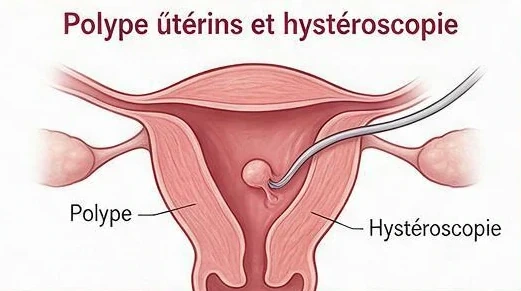
Uterine polyps and hysteroscopy
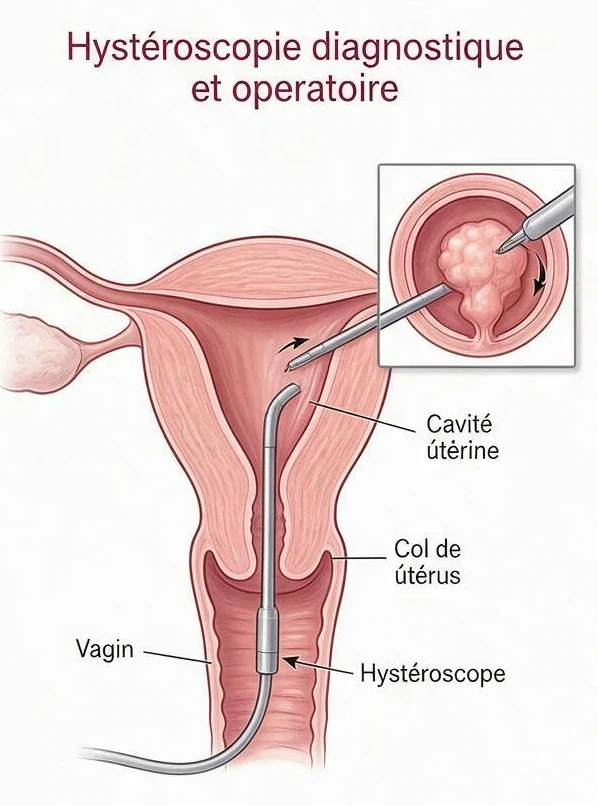
Hysteroscopy allows examination of the inside of the uterus. Depending on the findings, a polyp can be removed and sent for laboratory analysis.
Uterine polyps and hysteroscopyDiagnostic and operative hysteroscopy
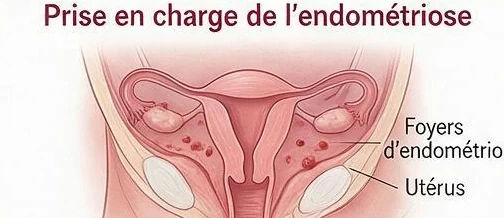
Endometriosis care
Choice of medical treatment, surgery or specialist referral takes into account pain, the extent of disease and pregnancy plans.
Endometriosis: lesions and uterus
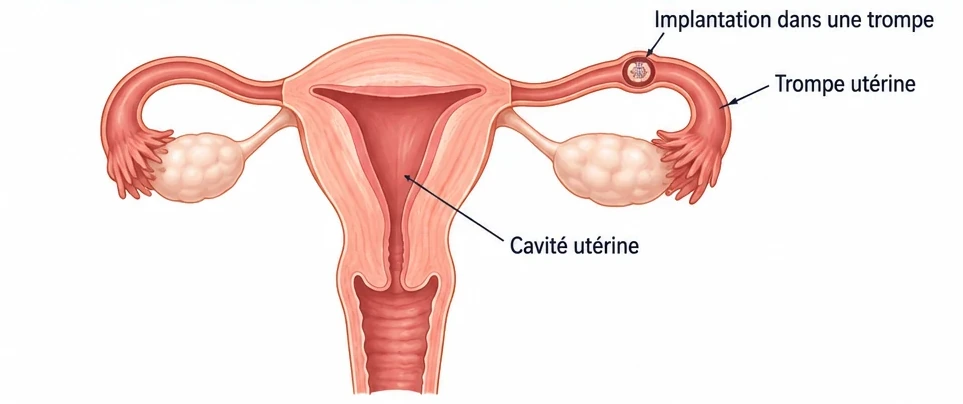
Ectopic pregnancy
A pregnancy implanted outside the uterus needs prompt assessment. Treatment options depend on the clinical condition. Seek emergency care if you have severe pain, faintness or heavy bleeding when pregnancy is possible.
Ectopic pregnancy: implantation in a fallopian tube
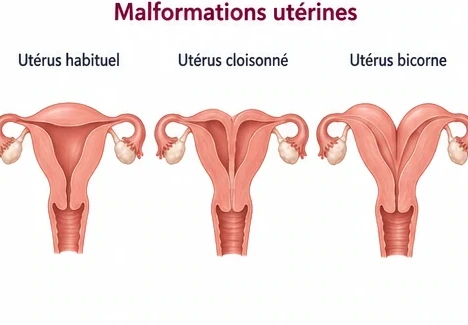
Uterine malformations
Imaging and medical history help identify a uterine malformation. Correction may be considered in selected situations, depending on the type of anomaly, symptoms or obstetric plans.
Uterine malformations: comparison diagrams
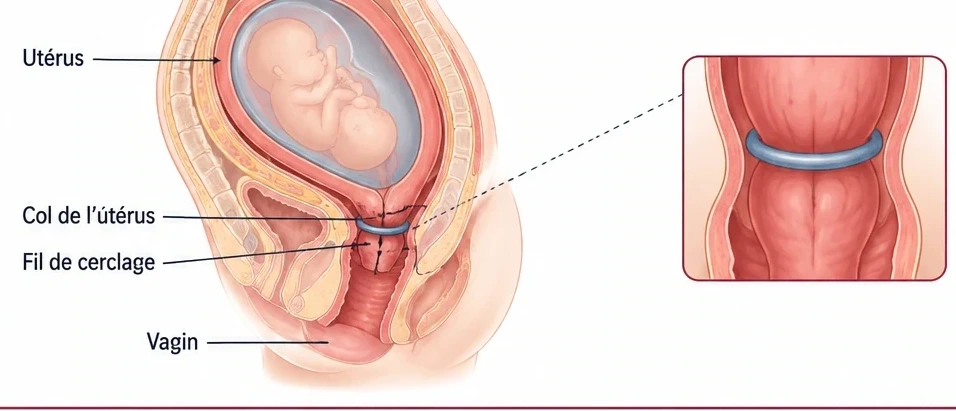
Cervical cerclage
A stitch can be placed around the cervix in some higher-risk pregnancies after obstetric assessment, based on history or ultrasound findings.
Cervical cerclage during pregnancy: diagram
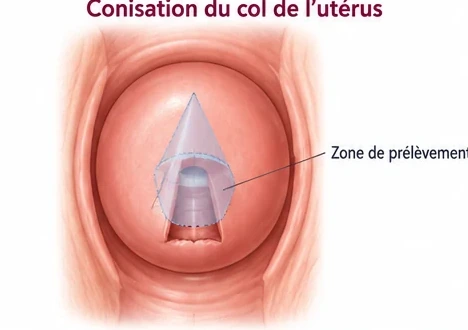
Cervical conization
This procedure removes part of the cervix for laboratory examination and, depending on the situation, to treat some precancerous changes. Histopathology results guide follow-up.
Cervical conization
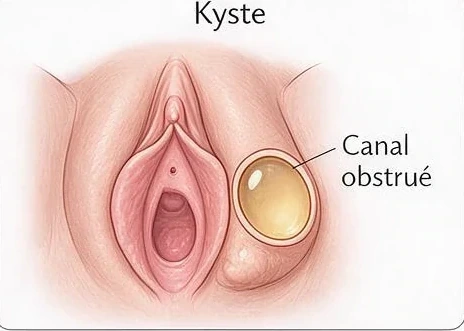
Bartholin gland cyst
Examination distinguishes a cyst from an abscess or another swelling. If symptoms are present, drainage or another procedure may be discussed based on the diagnosis.
Bartholin cyst: blocked duct
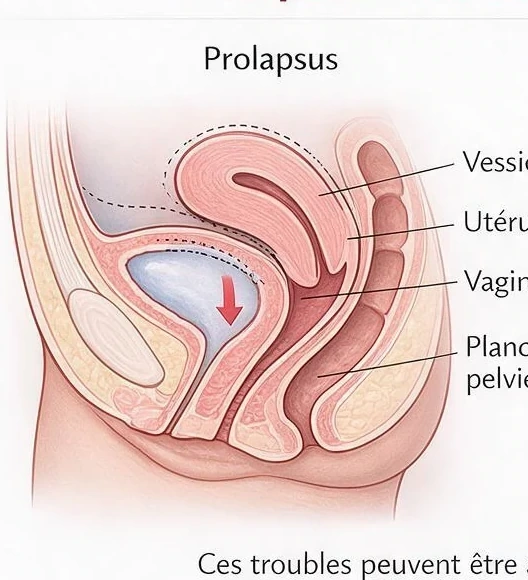
Pelvic organ prolapse care
Assessment identifies which organ is affected and the impact of its descent. Rehabilitation, a pessary or surgery is discussed according to symptoms and individual preferences.
Prolapse: sagittal pelvic section
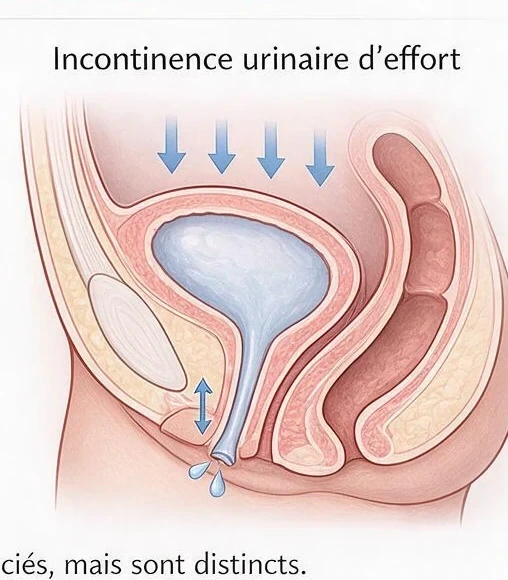
Urinary incontinence care
Stress leakage and leakage associated with a sudden urge require different pathways. Assessment guides choices, including rehabilitation or, in selected situations, surgery.
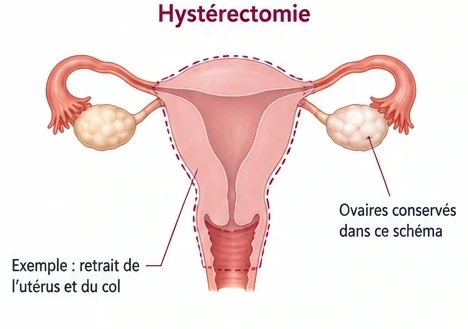
Removal of the uterus is considered for specific indications. Surgical approach and possible preservation of the cervix, ovaries or tubes are separate decisions.
Hysterectomy: removal of the uterus
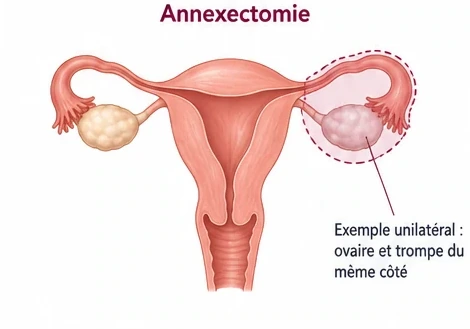
Adnexectomy
The procedure removes an ovary and fallopian tube on one side, or both sets of adnexa if medically indicated. Consequences for fertility and hormonal function are discussed before surgery.
Adnexectomy: unilateral example
From the practice to the clinic and follow-up
Consultation with a gynecologist
The initial appointment takes place in person at Dr Ines Ben Hassen Hached’s practice. She reviews your medical record and explains options, expected benefits, risks, alternatives and timing.
Procedure at a clinic in Tunis
The facility is confirmed before scheduling according to the procedure and availability. Before surgery, the team checks your history, allergies and medication, confirms consent and arranges an anesthetic assessment if needed. They explain postoperative monitoring and discharge criteria.
Follow-up at the practice
Some procedures can be performed as day cases if medically appropriate. Duration varies with the procedure, anesthesia and recovery. You receive aftercare guidance and a contact for any problems. Office follow-up focuses on healing, symptoms and pathology results when applicable.
After surgery involving a skin incision, wound care comes first. For selected fully healed external scars, such as a cesarean scar or another surgical scar, fractional CO₂ laser may be discussed following examination. One small study of mature cesarean scars suggests possible improvements in texture or flexibility. Outcomes vary with the scar, and risks include redness or pigment changes.
The possible use of CO₂ laser concerns only a selected external skin scar that has healed. Internal or mucosal scars, open wounds or a suspected complication require a specific medical assessment.
We do not offer online medical consultations. Appointments take place in person at Dr Ines Ben Hassen Hached’s practice in Ennasr 2, Ariana, Tunis.
Dr Ines Ben Hassen Hached’s practice welcomes patients from North Africa and other countries. The first appointment is at the practice in Ennasr 2, Ariana. If surgery is indicated, the team confirms the location in Tunis and organizes practice follow-up.
Before booking your return trip, ask for the selected facility’s address and the expected follow-up interval. Plan accommodation and taxi or local transport based on the neighborhood. Depending on where you stay in Greater Tunis, shops, cafés and services are available nearby. Arrange someone to accompany you if the team recommends it.
The initial appointment is to assess your request. Surgery, location and date are confirmed after consultation, any necessary investigations and your consent.
What is the difference between vaginoplasty and perineoplasty?
Vaginoplasty involves vaginal tissue, while perineoplasty involves the perineum. The area and cause of discomfort help determine the appropriate procedure.
Can a patient from another country book an appointment?
Yes. Contact the practice to arrange an in-person consultation and plan follow-up before returning home. Care arrangements are evaluated individually.
How much does surgery cost?
Cost depends on the procedure, clinic, anesthesia and follow-up. Ask what is included in the quotation after your assessment.
How long should I stay in Tunis?
The team explains when follow-up is due and when a return journey may be considered based on your recovery.
Dr Ines Ben Hassen Hached’s practice does not offer online consultations. Appointments take place in person in Ennasr 2, Ariana. To book, contact us by telephone, WhatsApp, email or private message on our social media accounts where available.
These institutional resources provide general background. Your care pathway and services available at the practice are discussed during your appointment.