
Understanding Your Condition
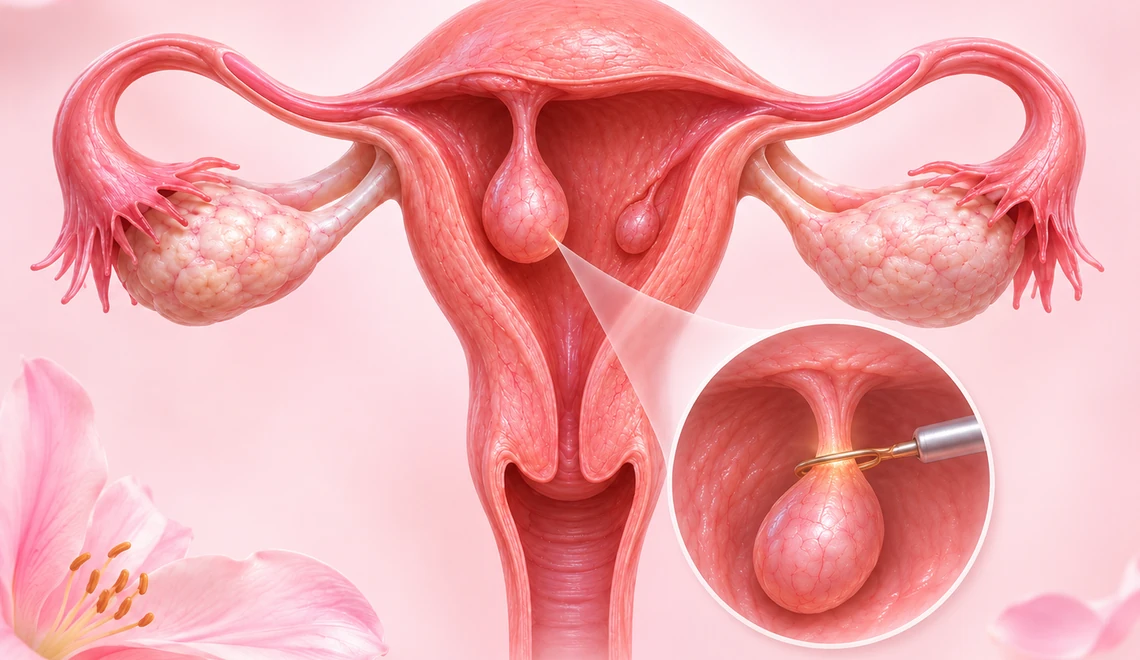
A uterine polyp is a growth arising from the endometrium, the lining of the uterine cavity. It may be found while investigating unusual bleeding or infertility, or during an ultrasound performed for another reason.
Symptoms and Situations
Possible signs include bleeding between periods, prolonged periods, bleeding after menopause or no symptoms at all. Bleeding after menopause should always be medically assessed.
Types and Key Differences
Polyps vary in size, number, attachment point and location. They should not be confused with a submucosal fibroid or diffuse thickening of the endometrium.
Which Investigations May Be Recommended?
Ultrasound, sometimes followed by examination of the uterine cavity, helps establish the diagnosis. Hysteroscopy provides a direct view inside the uterus using a slender camera introduced through the cervix.
Which Treatment Options May Be Discussed?
When removal is indicated, hysteroscopic resection allows a polyp to be removed without an abdominal incision. The removed tissue can then be examined. Anesthesia and procedural details are decided individually.
Preparation and Follow-Up at the Practice
Dr Ines Ben Hassen Hached explains which test results to bring, what to expect and how pathology findings will be communicated. Follow-up depends on the initial condition and changes in bleeding.
Why Consult Dr Ines Ben Hassen Hached?
At the practice in Ennasr 2, Ariana, Dr Ines Ben Hassen Hached takes time to discuss your symptoms, medical history and expectations. She reviews any test results already available, clarifies whether treatment may be indicated and organizes a care pathway suited to your situation. Details of any procedure and information specific to your case are explained during the consultation.
For a uterine polyp, symptoms and ultrasound or hysteroscopy findings help guide discussion of monitoring or appropriate treatment.
Frequently Asked Questions from Patients
Can a Polyp Be Removed Without an Abdominal Incision?
Yes. In many situations, hysteroscopy allows removal through the natural passages.
Why Is a Removed Polyp Sent for Analysis?
Examination of the tissue helps determine its nature and plan follow-up, particularly in the case of bleeding after menopause.
Consult Dr Ines Ben Hassen Hached
To review your symptoms, tests and available care options, make an appointment at Dr Ines Ben Hassen Hached's practice in Ennasr 2, Ariana.
Telephone: +216 27 550 875 | +216 25 333 530
Address: Résidence La Coupole, Avenue Hédi Nouira, Ennasr 2, Ariana 2037, Tunisia.
Book an AppointmentNo online consultations are available. All medical consultations take place in person in Tunis.