
Understanding Your Condition
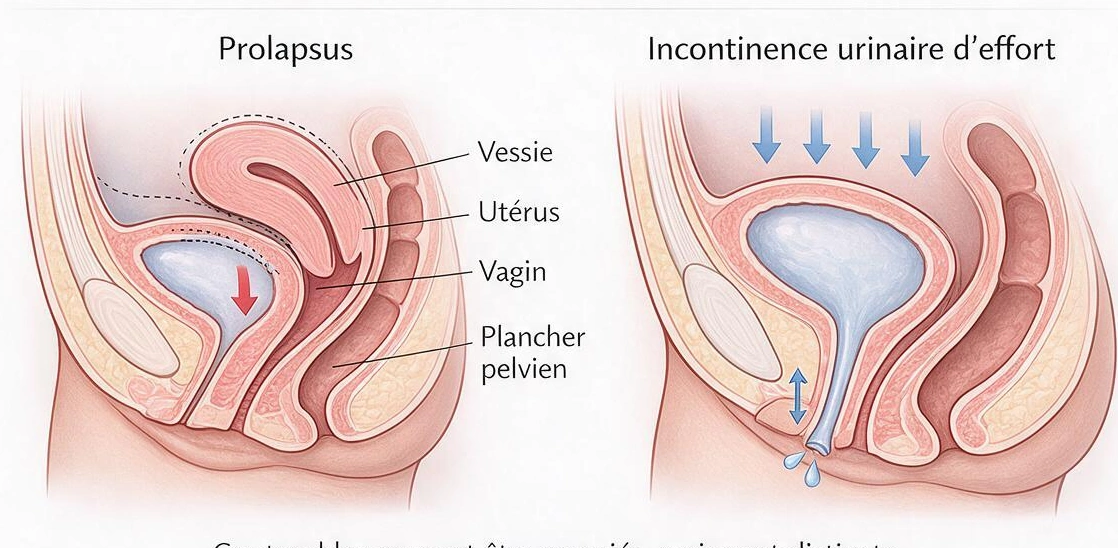
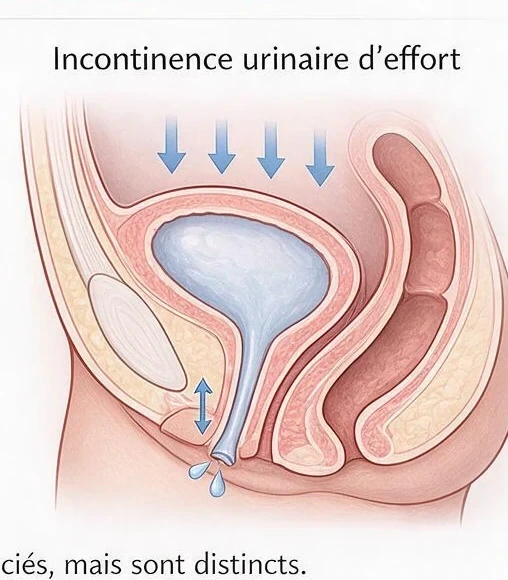
Pelvic organ prolapse occurs when one or more pelvic organs descend toward the vagina. Urinary incontinence refers to involuntary urine leakage. These conditions can coexist but are not the same and do not necessarily require the same management.
Symptoms and Situations
A vaginal bulge, pelvic heaviness at the end of the day, discomfort with some activities, leakage when coughing or exerting effort, urgency to urinate or difficulty emptying the bladder may prompt a consultation.
Types and Key Differences
Prolapse may mainly affect the bladder, uterus or posterior vaginal wall. Urinary incontinence may present as leakage on exertion, urgency incontinence or a mixed form.
Which Investigations May Be Recommended?
A discussion of urinary habits, a pelvic-floor examination and an assessment of symptoms guide the diagnosis. In some cases, a bladder diary and targeted tests supplement the evaluation.
Which Treatment Options May Be Discussed?
Treatment may include pelvic-floor rehabilitation, practical advice, a pessary for some forms of prolapse or surgery when indicated. Visible prolapse does not automatically require an operation.
Preparation and Follow-Up at the Practice
Dr Ines Ben Hassen Hached clarifies the type of condition and works with the patient to develop care suited to her discomfort and goals, including after childbirth or during menopause.
Why Consult Dr Ines Ben Hassen Hached?
At the practice in Ennasr 2, Ariana, Dr Ines Ben Hassen Hached takes time to discuss your symptoms, medical history and expectations. She reviews any test results already available, clarifies whether treatment may be indicated and organizes a care pathway suited to your situation. Details of any procedure and information specific to your case are explained during the consultation.
For prolapse or urinary leakage, the consultation focuses on day-to-day symptoms, pelvic-floor function and possible rehabilitation or treatment approaches.
Frequently Asked Questions from Patients
Is Urine Leakage Normal After Childbirth?
It is common, but should not be dismissed if it persists or interferes with daily life.
Does Prolapse Always Require Surgery?
No. Several options can be discussed according to symptoms, examination findings and the patient's preferences.
Consult Dr Ines Ben Hassen Hached
To review your symptoms, tests and available care options, make an appointment at Dr Ines Ben Hassen Hached's practice in Ennasr 2, Ariana.
Telephone: +216 27 550 875 | +216 25 333 530
Address: Résidence La Coupole, Avenue Hédi Nouira, Ennasr 2, Ariana 2037, Tunisia.
Book an AppointmentNo online consultations are available. All medical consultations take place in person in Tunis.